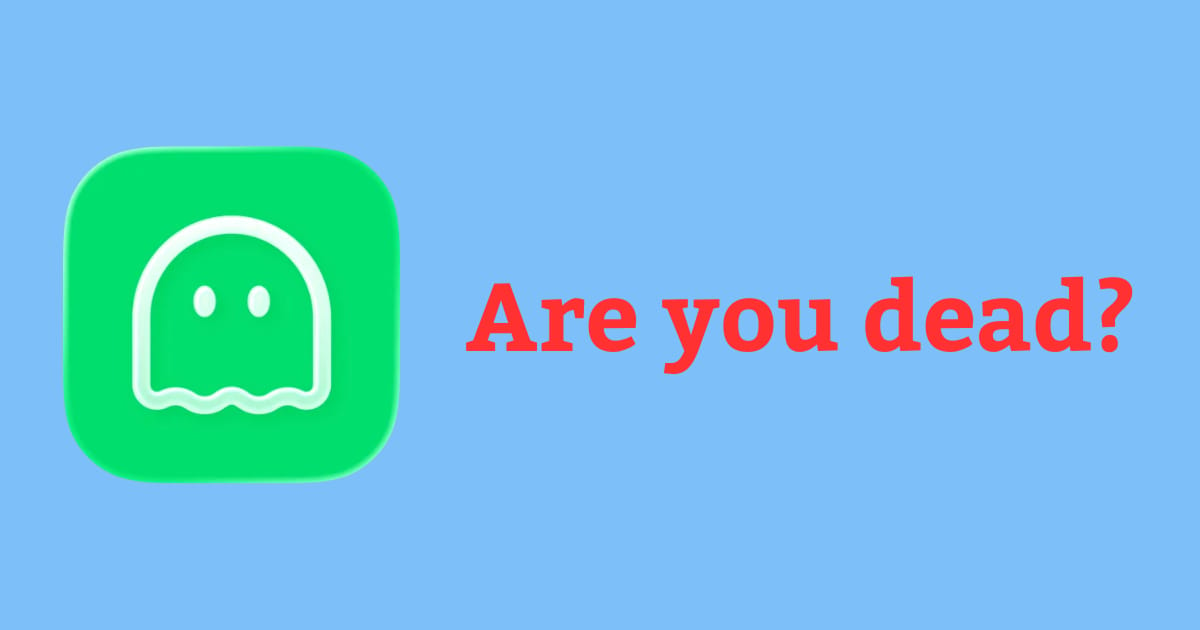
There’s an app going viral in China called “Are You Dead?”
You set a timer to check in regularly. If you don’t respond, it alerts your emergency contact. It exists because people living alone were dying and no one noticed for days, sometimes weeks.
The app has become the most downloaded paid app in China’s App Store history. Over 10 million people have downloaded it in a matter of weeks. Ten million people paid money for an algorithm to ask if they’re still alive.
One user wrote: “For the first time, someone is concerned about whether I’m dead or alive.”
Another: “The scariest thing isn’t loneliness — it’s disappearing.”
A pattern worth noticing
We’ve outsourced caring to technology.
China is facing 200 million projected single-person households by 2030. That’s a 30% solo living rate. But this isn’t just a Chinese problem. It’s a human problem that’s showing up there first because of scale.
The things that used to happen naturally don’t happen anymore. A call. A knock on the door. Just showing up. We didn’t decide to stop. We just got busy. We assumed someone else would check in. We waited for the other person to reach out first.
Meanwhile, people are living entire lives where no one would notice if they disappeared.
A 38-year-old designer in Shanghai who’s lived alone for a decade said this: “I just don’t want to die with no dignity, like the body gets rotten and smelly before it is found.”
The app isn’t protecting against loneliness. It’s protecting against invisibility.
The app works because it’s reliable. It checks in. It follows through. It doesn’t get busy or forget or assume someone else will handle it. It’s more dependable than the people who claim to love us.
The “Are You Dead?” app is a mirror. It’s showing us what we’ve become. A society so disconnected that we need an algorithm to do what friends used to do automatically. What family used to do without thinking about it.
And the algorithm does it better than we do.
Things to ask yourself
Who in your life might be quietly hoping someone will reach out? Not the people who are obviously struggling. The ones who seem fine. The ones who never complain. The ones who would never ask for help even if they needed it.
Engineer a collision this week
Think of one person right now. Someone you haven’t talked to in a while. Someone who crossed your mind recently for no particular reason.
Don’t text them. Call. Or if you’re local, show up.
You don’t need a good reason. You don’t need to explain yourself. Just say: “I was thinking about you. Wanted to see how you’re doing.”
No catching up on six months of life. No agenda. Just letting them know they mattered enough for you to act on the thought.
Do it today. Not tomorrow. Not when it feels less awkward. Today.
Because the alternative is a world where an app has to ask if you’re still alive.
And ten million people are grateful it does.